On the afternoon of June 23, Prime Minister Le Minh Hung, Head of the Government Steering Committee for Science, Technology, Innovation, Digital Transformation, and Project 06 on developing population data, identification and electronic authentication applications for national digital transformation, chaired a thematic meeting on promoting the development of science, technology and innovation.
Attending the meeting were Politburo Member and Permanent Deputy Prime Minister Pham Gia Tuc, who serves as Standing Deputy Head of the Steering Committee, along with Deputy Prime Ministers, leaders of central ministries, agencies and sectors.
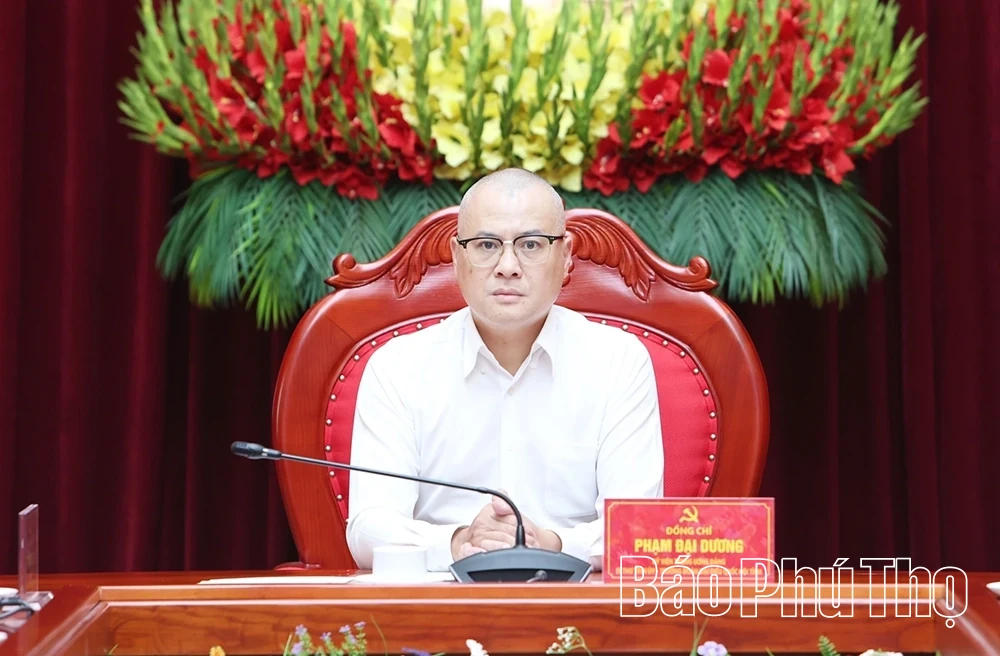
Provincial Party Secretary Pham Dai Duong attends and chairs the meeting at the Phu Tho provincial venue.
At the Phu Tho provincial venue, the meeting was chaired by Pham Dai Duong, Member of the Party Central Committee and Secretary of the Provincial Party Committee.
Also attending at the provincial venue were Tran Duy Dong, Alternate Member of the Party Central Committee, Deputy Secretary of the Provincial Party Committee and Chairman of the Provincial People’s Committee; members of the Provincial Party Standing Committee; leaders of the Provincial People’s Council and People’s Committee; members of the Provincial Steering Committees for Science, Technology, Innovation and Digital Transformation, and for Project 06; together with representatives of provincial departments and agencies.
In his opening remarks, Prime Minister Le Minh Hung emphasized that the meeting would focus on discussing breakthroughs in developing core technologies, strategic technologies and strategic products, thereby contributing to the completion of the national digital architecture framework.
According to the Prime Minister, the national digital architecture framework serves as the foundation for ensuring consistency and synchronization from the central to local levels, while supporting the operation of data systems for government leadership and administration as well as the effective delivery of online public services to citizens and businesses. Although a list of strategic technologies and products has been issued, implementation still requires greater consistency to ensure effectiveness and avoid formality or a race for deadlines.
The Prime Minister urged participants to identify existing bottlenecks, challenges and unresolved issues, while proposing practical solutions to create tangible breakthroughs and contribute to achieving double-digit economic growth in 2026 and the years ahead.
After one and a half years of implementing Politburo Resolution No. 57-NQ/TW on breakthroughs in science and technology development, innovation and national digital transformation, ministries, sectors and localities have made significant progress in awareness, thinking and action. Many ministries and agencies have proactively developed science and technology strategies aligned with their management areas, while gradually establishing policy testing mechanisms to promote research, technology transfer and mastery of core and strategic technologies.
According to Notice No. 246/TB-VPCP dated May 12, 2026, which concluded the third meeting of the Government Steering Committee for Resolution 57, ministries, sectors and localities were assigned 53 tasks, including 16 regular tasks and 37 tasks with specific deadlines. To date, 11 tasks have been completed, 24 are being implemented on schedule, and two remain overdue.
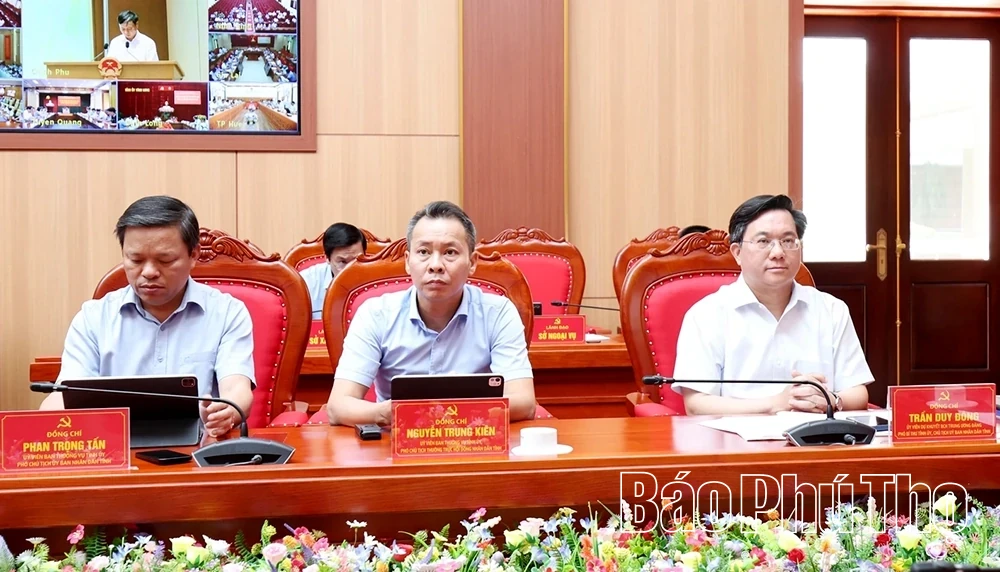 Delegates attend the conference at the Phu Tho provincial venue.
At the local level, many provinces and cities have begun identifying science and technology tasks and products that align with their comparative advantages and development potential. So far, 29 localities have registered 124 science, technology and innovation products. Of these, 33 belong to strategic technology groups, 70 relate to emerging technologies, digital technologies and high technologies, and 54 focus on agriculture, forestry, fisheries, biotechnology and agricultural processing.
Participants discussed solutions to promote science, technology, innovation and digital transformation based on the strengths of each sector and locality. Ministries and agencies proposed key priorities, including strategic technology development, financial mechanisms for science and technology, renewable energy, green building materials, tourism data platforms, precision agriculture, and research and production of high-tech pharmaceuticals and vaccines.
Localities shared experiences, models and development orientations in fields such as artificial intelligence and big data applications in governance and logistics; agricultural processing; renewable energy; biotechnology; and high-tech agriculture. They also proposed support mechanisms for technology enterprises, research infrastructure and national digital transformation initiatives. The meeting further provided an opportunity for localities to discuss and recommend priority products and sectors suited to their specific conditions.
Concluding the meeting, Prime Minister Le Minh Hung highly appreciated the implementation results of Resolution No. 57-NQ/TW achieved by ministries, sectors and localities. He stressed the need for a fundamental shift in thinking regarding science, technology and innovation development, putting an end to the practice of registering projects merely for appearances and without practical relevance.
In particular, scientific and technological tasks must originate from real-world challenges and be closely linked to the strengths, resources and development needs of each sector and locality. Their effectiveness, commercialization potential and contribution to socio-economic growth should serve as the primary criteria for evaluation.
The Prime Minister also called on ministries, sectors and localities to promptly address policy and institutional bottlenecks in order to shorten the path from research to application and commercialization. He emphasized the need to strengthen leadership and coordination in building value chains for science and technology products, while reviewing and classifying tasks at national, regional and local levels to ensure focused resource allocation.
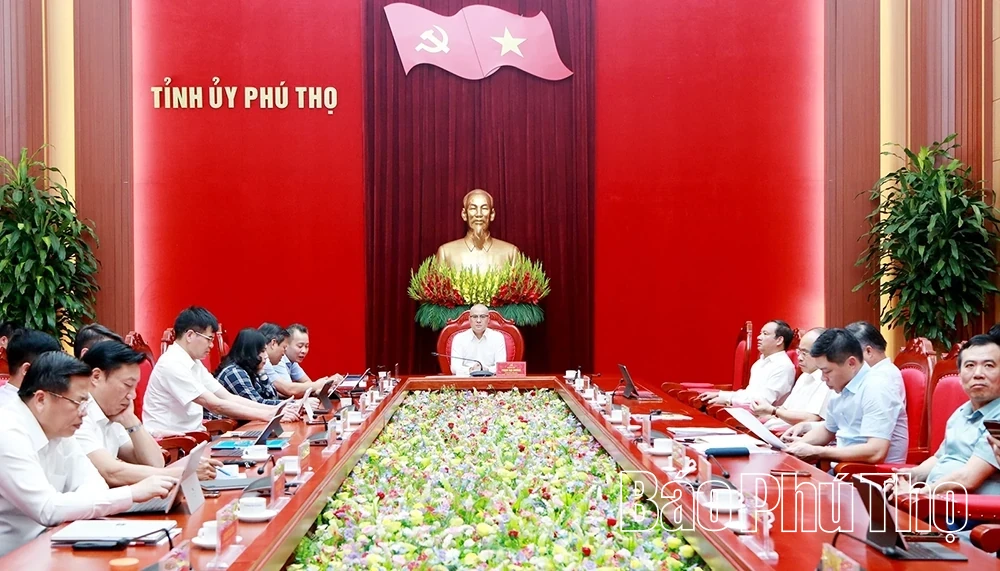 Overview of the conference at the Phu Tho provincial venue.
At the same time, mechanisms for sharing and utilizing research infrastructure should be improved, and private-sector participation in investing, operating and commercializing strategic and high-tech products should be encouraged.
Localities were urged to review all registered products, eliminate those lacking practical value, and focus on selecting the right products, the right advantages, the right enterprises and the right markets to create genuine growth momentum from science, technology, innovation and digital transformation.
(Source: en.baophutho.vn)