One of the key highlights of Resolution No. 23-NQ/TW on overseas Vietnamese affairs is that it not only reaffirms overseas Vietnamese as an inseparable part of the Vietnamese nation but also recognises them as an important strategic resource, actively contributing to national construction, development and defence.
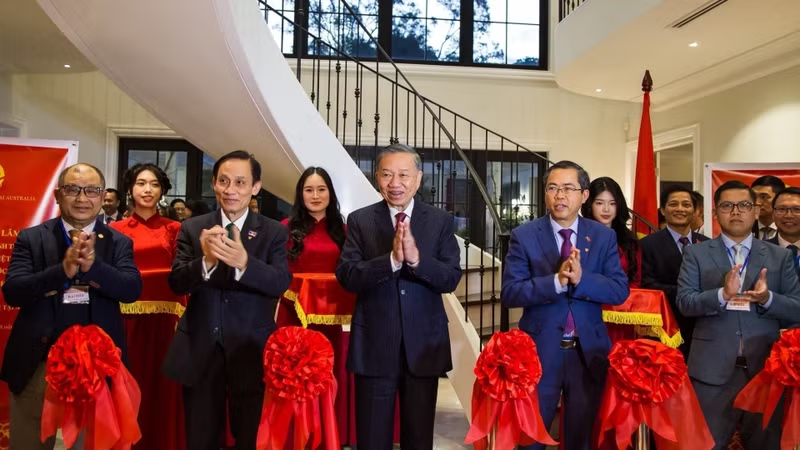
During his State visit to Australia in August 2026, Party General Secretary and State President To Lam, Minister of Foreign Affairs Le Hoai Trung, Vietnamese Ambassador to Australia Pham Hung Tam and Tran Ba Phuc (far left) cut the ribbon to inaugurate Viet Nam House in Australia. (Photo courtesy of the interviewee)
This assessment was made by Tran Ba Phuc, Member of the Central Committee of the Viet Nam Fatherland Front, President of the Vietnamese Business Association in Australia and Vice President of the Association of Overseas Vietnamese Entrepreneurs, in an interview with Nhan Dan Newspaper on the new features of the Politburo's Resolution No. 23-NQ/TW, issued on August 2, 2026, on overseas Vietnamese affairs (Resolution No. 23).
Q: Resolution No. 23 has been regarded as marking a new development in the approach to overseas Vietnamese affairs, introducing a range of breakthrough policies aimed at bringing about tangible changes and strengthening the long-term ties between overseas Vietnamese and their homeland. How do you assess the new features of the resolution?
A: In my view, the Politburo's Resolution No. 23-NQ/TW, issued on August 2, 2026, marks a new stage in thinking and approaches towards overseas Vietnamese communities.
Its most notable feature is that it not only reaffirms overseas Vietnamese as an inseparable part of the Vietnamese nation but also identifies them as an important strategic resource and active participants in national construction, development and defence. I believe the resolution introduces several significant changes.
First, it represents a shift in thinking from mobilising, bringing together and supporting overseas Vietnamese to accompanying them, creating favourable conditions and effectively harnessing their resources. This is a particularly important change. Previously, overseas Vietnamese affairs largely focused on community mobilisation, improving living conditions and strengthening emotional ties with the homeland.
Resolution No. 23 sets a higher requirement: the State must not only provide care and support but also proactively establish mechanisms and policies enabling overseas Vietnamese to participate more deeply, substantively and effectively in national development. This means moving away from viewing overseas Vietnamese primarily as a community to be mobilised towards recognising them as active partners and a strategic resource for national development.
Second, the resolution elevates the role of overseas Vietnamese communities from a source of support to a strategic national resource. Overseas Vietnamese are present in 130 countries and territories, including many highly qualified experts, scientists, intellectuals, entrepreneurs and professionals. They represent a valuable source of knowledge, technology, capital, management experience, international cooperation networks and connections to global markets.
The strategic significance of Resolution No. 23 lies in integrating the mobilisation of these resources into the country's overall development strategy. It creates further opportunities for overseas Vietnamese to contribute to key areas such as science and technology, innovation, digital transformation, education, healthcare, the green economy and high-quality human resource development.
Third, the resolution emphasises great national unity, national reconciliation and respect for diversity within overseas Vietnamese communities. One noteworthy aspect is its emphasis on promoting common ground between Vietnamese people at home and abroad, with national identity, patriotism, national pride and aspirations for national development serving as the foundations for solidarity.
Resolution No. 23 advocates national reconciliation, overcoming prejudices, setting aside the past and looking towards the future. It also reflects a willingness to listen to constructive contributions, including differing viewpoints that do not undermine national interests. I consider this approach particularly meaningful because overseas Vietnamese communities are highly diverse in terms of historical circumstances, living environments, generations, perspectives and experiences. Such an approach can help build trust and strengthen their long-term attachment to the homeland.
Fourth, the resolution marks a decisive shift from broad policy orientations towards improving specific mechanisms and policies and creating a favourable environment for overseas Vietnamese contributions. Resolution No. 23 calls for a comprehensive review and improvement of policies and laws relating to overseas Vietnamese, ensuring greater consistency, transparency, stability and convenience, while placing particular emphasis on administrative reform.
Q: With more than 370,000 members and thousands of entrepreneurs, the Vietnamese community in Australia serves as an important bridge and a substantial strategic resource for Viet Nam's development and bilateral cooperation. In your opinion, how can the resources of the Vietnamese community in Australia be effectively mobilised to support national development in line with Resolution No. 23?
A: In my opinion, the effective mobilisation of the resources of the Vietnamese community in Australia requires a shift from general appeals and mobilisation efforts towards establishing concrete, practical and long-term cooperation mechanisms.
The Vietnamese community in Australia possesses not only economic resources but also knowledge, technology, international management experience, business networks and an in-depth understanding of both the Vietnamese and Australian markets. These are highly valuable resources if properly connected and utilised. In my view, efforts should focus on five key solutions:
First, creating a transparent, stable and favourable investment and business environment is essential to attracting overseas Vietnamese entrepreneurs, investors and experts to contribute to their homeland. This requires continued policy improvements, simplified administrative procedures, protection of investors' legitimate rights and interests, and greater transparency in the business environment.
Second, the Vietnamese business community in Australia should play a stronger role in connecting trade and investment between the two countries. Vietnamese entrepreneurs in Australia possess advantages in language, local culture, business relationships and knowledge of the laws and business practices of both countries. Their role should therefore be strengthened in connecting enterprises, promoting trade, expanding export markets, attracting investment and facilitating deeper participation in regional supply chains.
Third, greater attention should be paid to attracting the knowledge, technology and management experience of overseas Vietnamese experts, intellectuals and entrepreneurs. The resources of overseas Vietnamese communities extend beyond capital and investment to include intellectual expertise, innovation experience and access to advanced international achievements. Viet Nam needs mechanisms enabling Vietnamese experts, scientists and entrepreneurs in Australia to participate in policy consultation, human resource training, technology transfer and project development in areas such as education, healthcare, high-tech agriculture, clean energy, digital transformation and artificial intelligence (AI).
Fourth, substantive cooperation mechanisms should be established, with effectiveness and a fair balance of interests as their foundation. To attract sustainable contributions, the State must ensure that overseas Vietnamese can clearly identify cooperation opportunities, have their legitimate interests protected and see their contributions recognised. Mechanisms should also be established to connect overseas Vietnamese investors with local development projects.
Fifth, it is essential to strengthen great national unity, reinforce connections with overseas Vietnamese communities and promote the role of younger generations. The central spirit of Resolution No. 23 is to harness the strength of great national unity, encourage overseas Vietnamese to maintain ties with their homeland, invest in national development and contribute their knowledge and expertise.
Therefore, community engagement should therefore be based on respect, openness, dialogue and reconciliation, setting aside the past and looking towards the future. I believe every Vietnamese person in Australia, regardless of their financial circumstances or profession, can contribute to their homeland in ways suited to their abilities and conditions.
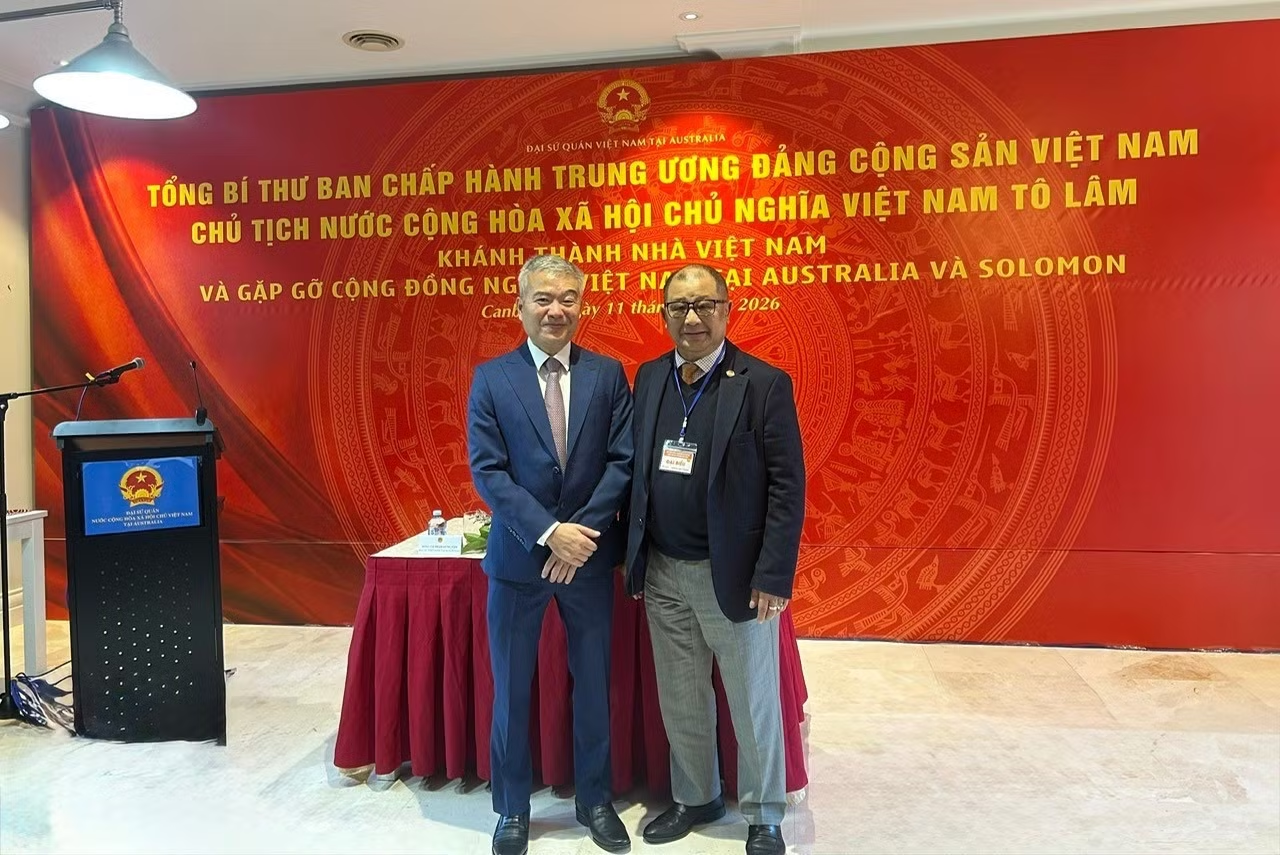
Tran Ba Phuc (right) is among the prominent overseas Vietnamese representatives attending the inauguration of Viet Nam House and a meeting between Party General Secretary and State President To Lam and Vietnamese communities in Australia and the Solomon Islands during his State visit to Australia in August 2026. (Photo courtesy of the interviewee)
Q: As President of the Vietnamese Business Association in Australia (VBAA), could you share some information about the association's activities and contributions to promoting economic, trade and investment cooperation, as well as strengthening overall bilateral relations between Viet Nam and Australia?
A: I believe the elevation of Viet Nam–Australia relations to a Comprehensive Strategic Partnership in March 2024 opened a new stage of development, creating greater opportunities for deeper cooperation in economics, trade, investment, science and technology, education, energy and green transition.
Against this backdrop, the VBAA seeks to further strengthen its role as a bridge between the business communities of the two countries, helping translate bilateral cooperation commitments into practical outcomes.
In promoting economic, trade and investment cooperation, the VBAA aims to connect Vietnamese enterprises with Australian partners, helping businesses from both countries identify potential partners, expand markets, exchange information and explore business opportunities.
I realise tat Viet Nam and Australia possess many complementary advantages. Viet Nam has a dynamic market, increasingly developed manufacturing capabilities and extensive international economic integration. Australia, meanwhile, has strengths in technology, education, agriculture, natural resources, professional services, capital and management expertise. On this basis, sectors such as agriculture and food processing, goods trading, logistics, education, technology, renewable energy and professional services offer considerable potential for stronger business cooperation.
The VBAA seeks to help enterprises identify suitable partners and overcome initial difficulties when entering new markets.
The association also places particular emphasis on promoting the role of the Vietnamese business community in Australia. These entrepreneurs understand both markets and can bridge linguistic and cultural differences, business practices and professional networks in the two countries.
Many Vietnamese entrepreneurs in Australia have accumulated valuable experience, professional expertise and strong reputations across various business sectors. If these resources are effectively connected and utilised, they can make practical contributions to bringing Vietnamese goods, services and brands into the Australian market while facilitating Australian enterprises' exploration of investment opportunities in Viet Nam.
Regarding broader bilateral relations, I think the VBAA's role extends beyond economic cooperation. Through business exchanges, community networking and cooperation with diplomatic, economic and trade representative agencies and industry associations from both countries, the association has contributed to strengthening mutual understanding, trust and connections between the Vietnamese and Australian peoples.
Looking ahead, the VBAA will continue improving its networking capabilities and expanding cooperation in a practical, professional and sustainable manner. Its overarching goal is to become a reliable, dynamic and effective bridge between the business communities of Viet Nam and Australia.
Q: Leveraging the strategic resources of overseas Vietnamese for national development, particularly in science, technology, innovation, digital transformation, artificial intelligence, semiconductors, biotechnology and start-up ecosystems, is one of the core priorities of Resolution No. 23. What measures will the VBAA take to encourage entrepreneurs to participate actively and effectively in these efforts?
A: In my view, the VBBA sees its role as extending beyond connecting entrepreneurs to serving as a strategic bridge linking Australia's technological expertise, capital and business networks with Viet Nam's development needs. The association will step up communication efforts, raise awareness and inspire patriotism and a desire to contribute to the homeland among Vietnamese entrepreneurs in Australia.
It will proactively disseminate Party and State policies relating to overseas Vietnamese and national development, helping Vietnamese entrepreneurs in Australia better understand Viet Nam's priority development sectors. This will enable them to identify their own strengths, resources and opportunities to make practical contributions.
The VBAA will also encourage overseas Vietnamese entrepreneurs to invest in technology transfer and develop specific projects in Viet Nam. In this regard, the association will focus on promoting start-up and innovation ecosystems between Viet Nam and Australia.
Furthermore, it will strengthen its role in bringing together community resources by developing a more professional and focused network of Vietnamese entrepreneurs and experts in Australia, enabling more substantive activities and contributions. The Vietnamese community in Australia possesses considerable advantages in technological knowledge, international management experience, market access and global networks.
Thank you very much!
(Source: NDO)